Freeman Explore

  • Buy our Books!
  • A Year in the Wilderness
    • Bear Witness (Short Film)
    • Read the Book!
  • About
    • Videos
    • Media Resources
    • Media Archives
  • Education
  • Speaking
    • Speaking Resume
    • Testimonials
  • Expeditions

Rio Roosevelt Expedition Complete

image

Theodore Roosevelt sits in dugout canoe on the “River of Doubt”. Photo used with permission of Theodore Roosevelt Collection, Houghton Library, Harvard University.

The expedition team has successfully completed the Rio Roosevelt Centennial Expedition. The Brazilian team members are all back home. Dave is on his way and will arrive back in Minnesota tomorrow. Paul is enjoying a few more days in Brazil with his wife, Susan. Thanks for following the adventure! You can find the press release about the completion of the expedition by clicking here. We will post more photos from the expedition here in the upcoming week.
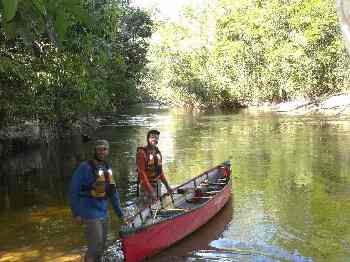
Dave and Paul launching on the Rio Roosevelt where Roosevelt's expedition team launched 100 years ago.

Dave and Paul launching on the Rio Roosevelt where Roosevelt’s expedition team launched 100 years ago.


Filed Under: Rio Roosevelt Centennial Expedition Tagged With: news release, Rio Roosevelt, River of Doubt

A red letter day

April 15, 1914: “a red letter day” noted Theodore Roosevelt in his diary with jubilation. After being devastated by the death of 3 team members and wracked by illness, insects and intense hunger during their first 45 days on the River of Doubt, the team was immensely relieved to make their ‘first contact’ with the outside world by coming upon the primitive home of a Brazilian rubber tapper.


Today was our “red letter day” in that we experienced a “first contact” of a sort as well. (Although truth be told, most every day has been a ‘red-letter day’ for us. Compared to Roosevelt’s epic trek, ours has been a veritable cakewalk!) We’ve long been anxious about connecting with the Cinta Larga who control access to this region. A week ago, after much apprehension, we finally received tacit approval for entry into the reserve by phone message for from a tribal chief, but we had yet to meet any Cinta Larga.


Last evening, we arrived by canoe at a stout but aging wooden bridge with a beach nearby that beckoned us to camp. In a distant clearing on the far shore were the huts of a Cinta Larga village. After setting up our hammocks, our curiosity got the best of us so we slipped across the bridge to get a view of the settlement.


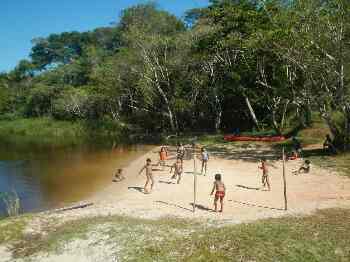
What a scene! The villagers were all gathered outside around a television watching the World Cup soccer games. Just then Brazil cinched a win over Cameroons and we listened as the Cinta Larga shouted with glee and shot off fireworks. Moments later excited Cinta Larga kids arrived at our beach to play soccer in the sand. Making the most of our ‘pigeon Portuguese’, we struck up a conservation with the woman who accompanied them. When she indicated she was a teacher, we asked if we could visit her school the next day. Yes, she said, but only if the village chief granted permission.


Kids playing soccer by our campsite

Kids playing soccer by our campsite

Later that evening, after we’d settled into our jungle hammocks for the night, a man stopped by in the dark. Very friendly, he expressed interest in our journey. We were amazed to learn he’d been the Cinta Larga team member of a 1989 Roosevelt Memorial Association expedition that had rafted down the river.  Oita-mina is his name. He too said we could visit the village if we received the chief’s permission. Much to our delight, he said he’d return in the morning to escort us to the chief’s home.


Early today Oita-mina arrived with another Cinta Larga man, but they had disappointing news – the chief was away so we could not enter the village. They visited with us for a while (we even took them canoeing!), said goodbye and we prepared to pack up and paddle. But both of us then had a quick hunch that maybe we should hang tight awhile and see what might happen.


Sure enough, more villagers came by. First a group of hunters heading out into the jungle with bows and arrows. Then a group of Cinta Larga women and girls arrived who visited with us. One woman, the village nurse, was very accommodating of our limited Portuguese vocabulary so we told her as well that we had hoped to visit her village. No problem, she said. Although the chief was away, she said we could get permission from the assistant chief.

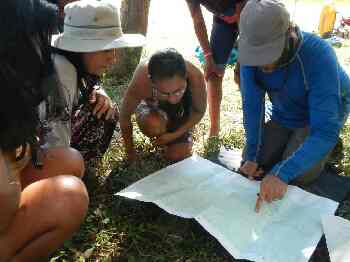
The community nurses help us find other Cinta Larga communities on our maps.

The community nurses help us find other Cinta Larga communities on our maps.


The women escorted us to the village where the vice-chief, a woman named Marcellina, very gratiously welcomed us. We enjoyed a great village tour: the tiny store, school and health clinic that serves the 300 villagers and we had a wonderful lunch with the nurse and her husband, a village teacher. Then we visited the home of Oita-mina, the Cinta Larga elder who’d stopped by our camp the night before. He dressed in the feathered Cinta Larga headdress and arm bands he wears for tribal dances and he gave each of us a wonderful gift: 5′-long arrows from his hunting quiver handmade with hardened bamboo points, taquara wood shaft and eagle feathers.


We were stunned by his kindness. We were also delighted to learn from him that the Cinta Larga are gathering for a huge tribal festival in 4 days at another village downstream from here. So now we’re on the water paddling again hoping to attend the festival. But that depends on permission from another tribal chief. Our ‘first contact’ with the Cinta Larga has been fantastic and we’re hopeful for other great connections ahead during our last week of this expedition.

Filed Under: Rio Roosevelt Centennial Expedition Tagged With: Cinta Larga, first contact, red letter day, Roosevelt, soccer, village, World Cup

Retracing Roosevelt’s journey

By Jason Zabokrtsky


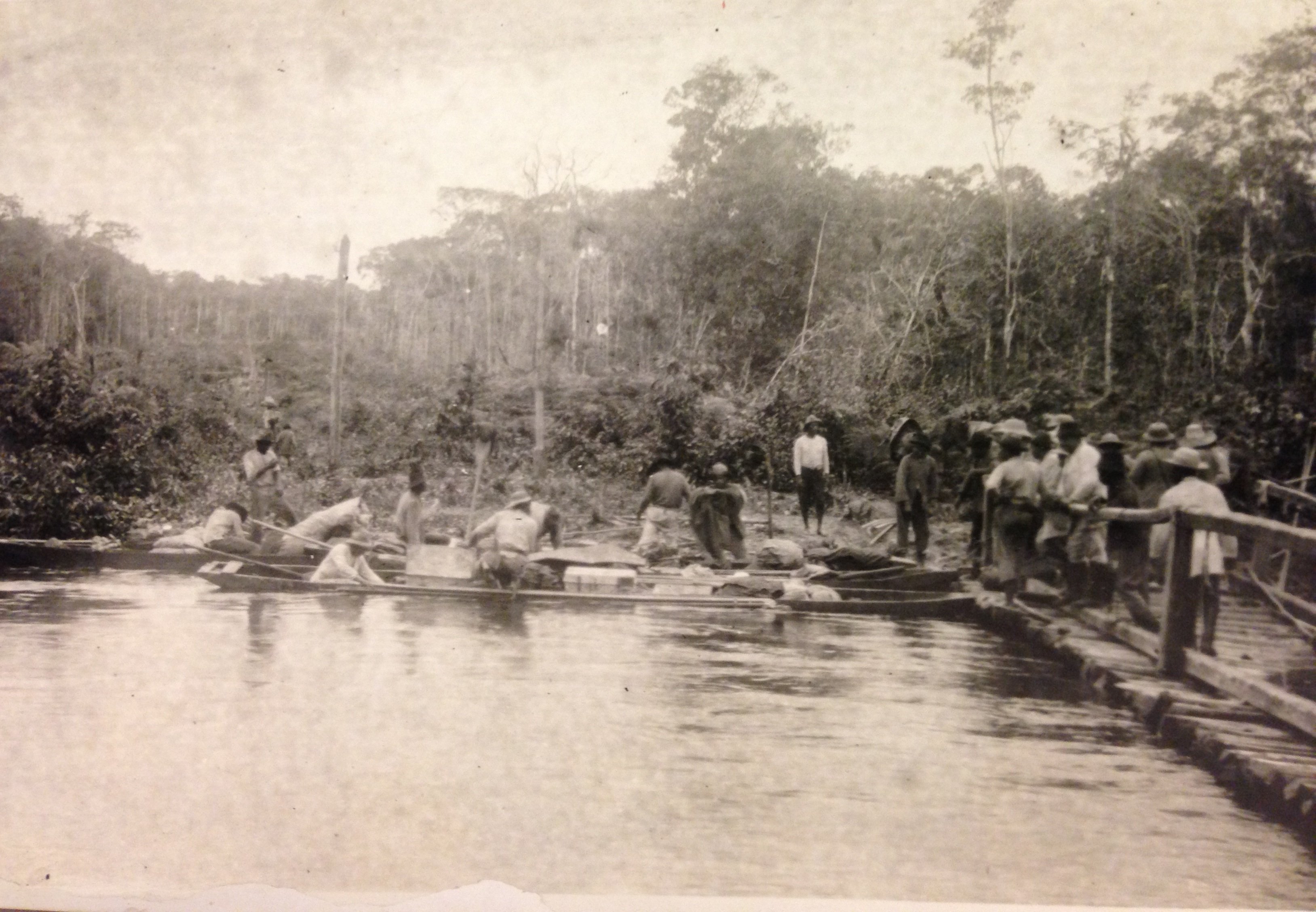
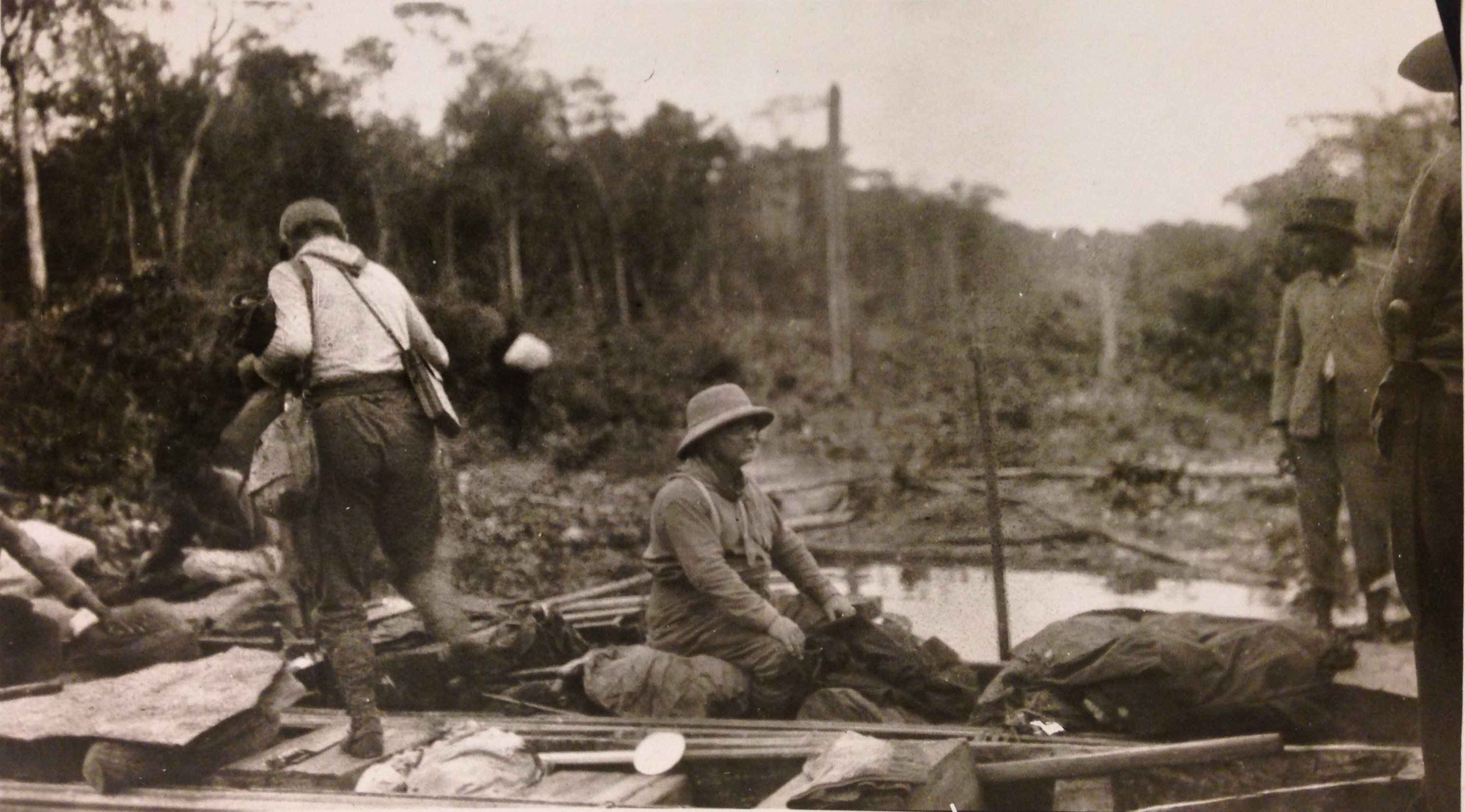
On February 27, 1914, President Roosevelt started down the River of Doubt into the unknown with a team of twenty-two Brazilians and Americans. These photos show his team at the river’s headwaters at the start of the epic expedition. Roosevelt is in the center of the photo wearing a pith helmet.image

Dave and Paul have reached this historic area and are paddling the river’s headwaters.

Brazil’s legendary explorer, Colonel Rondon, discovered these mysterious headwaters while establishing a remote telegraph line. The telegraph line and rough bridge have long since disappeared into the rain forest.image

As Roosevelt wrote in his diary, “we had seven canoes, all of them dugouts. One was small, one was cranky, and two were old, waterlogged, and leaky. The other three were good.”

Times have changed. Dave and Paul are paddling a technologically-advanced folding canoe that is relatively nimble in rapids. At a fraction of the weight of the hollowed-out tree trunk canoes, it may be conveniently portaged around rapids.

Photos used with permission of Theodore Roosevelt Collection, Houghton Library, Harvard University.

Filed Under: Rio Roosevelt Centennial Expedition, Uncategorized Tagged With: headwaters, Rondon, Roosevelt, telegraph line

Back to the beginning: paddling the Rio Roosevelt from the actual starting point of the Roosevelt Rondon Scientific Expedition

The last four days have been a whirlwind. We have traveled over 1,000 km by bus and car from one end of the Rio Roosevelt to the other. Luckily our Brazilian companions make the travel logistics look easy. They quickly talked a couple of half empty trucks into transporting our canoes down the Tran-Amazon “Highway” and then we all climbed on the first bus headed west. The bus, which we quickly nicknamed the magic bus was headed to the big city for some much needed repair. We ended up having the whole bus to ourselves and convinced the young driver to drive us an extra 200 km to Porto Velho for about $100. The only hitch was that the driver filled the bus floor to ceiling with crates of empty bottles for the final 200 km. He only left 8 seats at the front free for us and we had to cram the isle between our seats with all of our stuff.

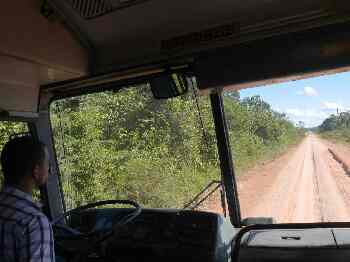
The view from the bus.

The view from the bus.

We picked up our vehicles and canoe trailer in Porto Velho and spent a morning looking for historic photos and artifacts from the Roosevelt-Rondon Expedition. We found a small museum with a collection of photographs and documents from the expedition, but the curator of the collection was on vacation. Paul and I plan to return to the museum in about 10 days to see the collection.

Last night we were back in Pimenta Bueno at the Hotel Piritiba, where we stayed for several nights before starting our paddle. Luckily this time we have been granted permission by the Cinta Larga to paddle the upper section of the Rio Roosevelt. Our Brazilian teammates worked hard last night and again this morning to try and find someone who would drive us 100 km from Pimenta Bueno to the Baleiza Fazenda (Fazenda means farm in Portugese). In the end they drove us to the headwaters. It took us hours over rough roads to reach the water. After taking a few photos we said goodbye and they drove away, leaving Paul and me alone. It would have been very difficult for us to find a ride to this remote put in without their help. They have a 3,000 km drive to get back to their families. It was really generous of them to drive us all the way to the river.

Dave and Paul launching on the Rio Roosevelt where Roosevelt's expedition team launched 100 years ago.

Dave and Paul launching on the Rio Roosevelt where Roosevelt’s expedition team launched 100 years ago.

Like Roosevelt did one 100 years ago, we will camp here before beginning our descent. Looking downstream from this spot I can picture Roosevelt’s canoe disappearing around the first bend into the unknown. Tomorrow we will do the same. We plan to spend about a week paddling the first 130 km of the river to the main Cinta Larga village. Marcello, the Cinta Larga chief who gave us permission to paddle the river, lives in that village. We are really looking forward to meeting Marcello and other members of his community and learning more about the Cinta Larga. We will also be searching for some of Roosevelt’s campsites and documenting the rapids that gave the expedition team so much trouble at the beginning of their journey. Let the adventure continue!

Filed Under: Rio Roosevelt Centennial Expedition Tagged With: beginning, bus, Dave, headwaters, launch, logistics, Paul, Rio Roosevelt, Rondon, start, transportation

Contact Us

Do you have questions or comments? Perhaps you would like to join us on a wilderness adventure, or have us speak at your business, school, or event.

Contact us!

Connect with the us

  • Facebook
  • Instagram
  • Twitter
  • Vimeo
image

Copyright 2025 Freemans Explore · Log in

Loading Comments...